
As food prices continue to rise across Canada, many families are finding it increasingly difficult to afford healthy, nutritious groceries. In response to growing concerns about food insecurity, Toronto City Council is moving forward with an innovative pilot project aimed at making essential food items more affordable for residents.
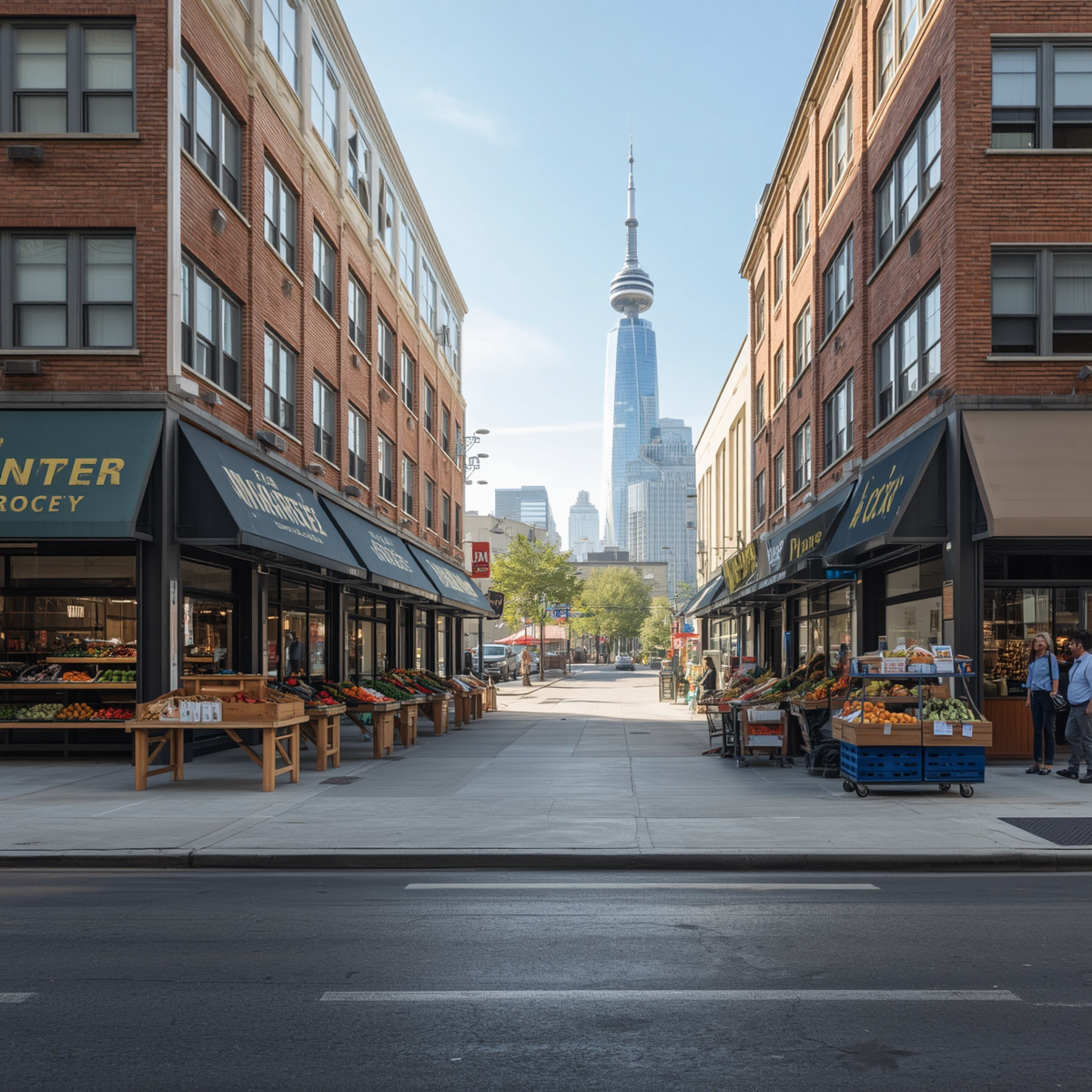
In March 2026, Toronto City Council officially approved a pilot program to establish four city-owned, non-profit grocery stores across the city. The initiative is designed to provide affordable staple foods in neighborhoods that have limited access to full-service grocery stores, often referred to as “food deserts.” The stores will be strategically located in each of Toronto’s four community council districts: Downtown/East York, Etobicoke York, North York and Scarborough. The stores plan to operate as not-for-profits, offering food at the most affordable prices possible by eliminating typical corporate markups.
How effective will this initiative be at solving food insecurity in Toronto?
While there is broad agreement that stronger action is needed to address food insecurity across the Greater Toronto Area, questions remain about whether publicly operated grocery stores are the most effective solution.
Critics of the proposal, including some economists and food policy experts, argue that the initiative may face challenges in achieving its goals. Grocery retail is a low-margin business, with large chains benefiting from economies of scale through their purchasing power, distribution networks, and supplier relationships (1). Many retailers also rely on higher-margin products, such as prepared foods and convenience items, to offset the slim margins on staples like milk, meat, and fresh produce (5). Operating costs including staffing, rent, utilities, transportation, and inventory management would still need to be covered. Without markups on value-added products or ongoing public support, it remains unclear how the stores would sustainably fund these expenses.
Toronto Councillor Anthony Perruzza has suggested the initiative could save families between $2,500 and $10,000 annually on grocery bills while operating without subsidies (3). However, those estimates are difficult to evaluate at this stage, as key details regarding distribution, operating costs, supplier agreements, and logistics have yet to be finalized.
Some experts argue that public funds could have a greater impact if directed toward targeted food security programs rather than a municipally operated grocery chain. As University of Guelph food economist Mike von Massow noted, “A public grocery chain would be a far more expensive way to help far fewer people.” (4)
Critics also question whether the benefits would be effectively targeted. Because the proposed stores would be open to all shoppers, regardless of income, opponents argue that any savings would be shared broadly rather than focused on households facing the greatest food insecurity. While lower grocery prices would be welcomed by most consumers, some experts contend that more targeted programs could deliver greater support to those most in need.
Supporters Say It’s About More Than Groceries
Supporters of the initiative, including Toronto City Council, argue that the proposal is about more than simply operating grocery stores. The broader strategy includes exploring policy tools to address excessive pricing, increasing transparency around retail pricing practices, and requiring greater disclosure on the use of consumer data and algorithmic pricing (6). Council has also called on provincial and federal governments to strengthen competition in the grocery sector, including measures to prevent large retailers from using restrictive property agreements that limit competitors from operating nearby. (6)
As the debate continues, the proposal has become part of a broader conversation about how governments can improve food affordability, increase competition, and ensure residents have reliable access to nutritious food.
What’s Next for the Proposal?
While it will likely be several years before any city-owned grocery stores become a reality, the proposal is already generating significant discussion. City staff are not expected to report back on the logistics, feasibility, and overall vision for the stores until the second quarter of 2027. (6)
When contacted for comment, Leslie Campbell, a Policy Development Officer with the City of Toronto, emphasized that the City’s current priority is expanding its school food program. The initiative aims to provide a nutritious morning meal to all public school students from kindergarten to Grade 12 by the 2026–27 school year. According to Campbell, work on the proposed grocery stores remains in the early stages, with stakeholder consultations and broader public engagement still to come.
In the meantime, the initiative has brought renewed attention to food accessibility challenges across Canada and has sparked important conversations about innovative approaches to addressing food insecurity. Whether or not the plan ultimately moves forward, it has already succeeded in highlighting the need for creative solutions to ensure all Canadians have reliable access to affordable, nutritious food.
- https://theconversation.com/public-grocery-stores-wont-fix-canadas-food-affordability-crisis-279932
- https://www.policyalternatives.ca/news-research/how-public-grocery-stores-could-work-in-canada/
- https://www.google.com/search?sca_esv=ec2bff8bd1e2ef21&rlz=1C1UEAD_enCA1146CA1149&sxsrf=ANbL-n4uo6swhoF8sZP-LWwgp5gW7JrbnA:1781634799706&udm=7&fbs=ADc_l-aN0CWEZBOHjofHoaMMDiKp9lEhFAN_4ain3HSNQWw-mMGVXS0bCMe2eDZOQ2MOTwnOYSZAomoiY9KIVpfrRAzF8BfwKfiRyQXNrTdGqDT2KGSCqg93eA-BeZ06nspvnIlLV2ECtKr07fq9xxdBRDQL_qQq4WxbKQt5DVBQfMaDNqOjrpx2MzM1JArKiDZi5tyJpoOBew5WNbLkG0J08J9Q4ljd9g&q=public+grocery+stores&sa=X&ved=2ahUKEwiyguzqsoyVAxWjJTQIHYLLOZYQtKgLegQIWRAB&biw=1280&bih=631&dpr=1.5#fpstate=ive&vld=cid:2801dbee,vid:4q0lDe24SZA,st:0
- https://www.uoguelph.ca/oac/news/public-grocery-stores-won%E2%80%99t-fix-canada%E2%80%99s-food-affordability-crisis
- https://competition-bureau.canada.ca/en/how-we-foster-competition/consultations/response-retail-council-canada-consultation-market-study-retail-grocery
- https://secure.toronto.ca/council/agenda-item.do?item=2026.MM39.27